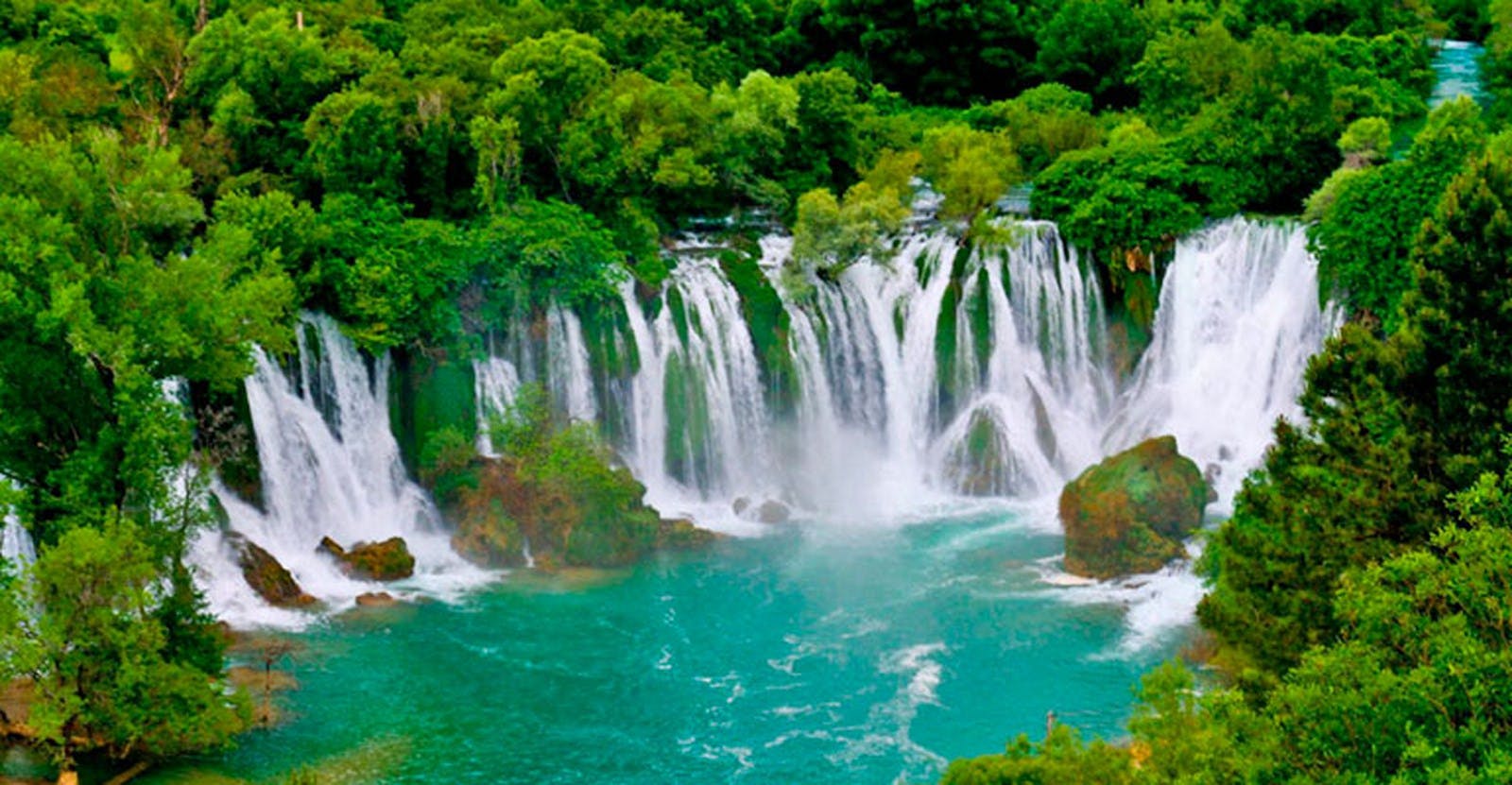
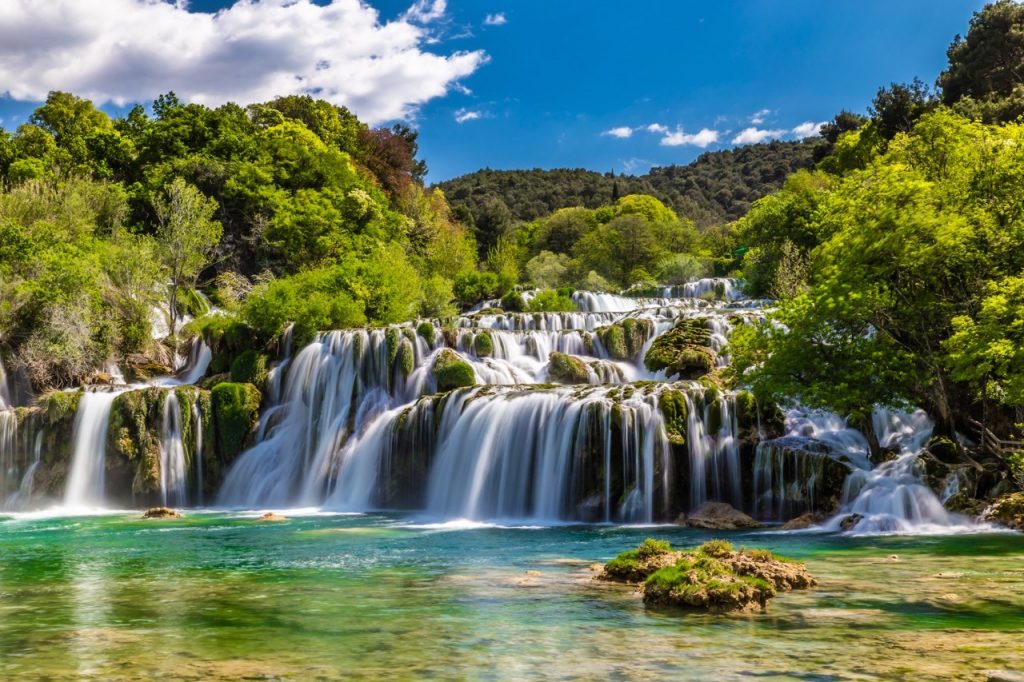
Pansion Begić is located between two famous national parks. In the north it is Krka wqith its famous waterfalls, and in the south it is Kravice.
Krka National Park lies within Šibenik-Knin County, and covers a total area of 109 km² of the loveliest sections of the Krka River, and the lower course of the Čikola River. It is about 100km north of our location.
With its clear water and untouched nature Krka national park is one of the most famous in parks in Croatia, named after the river Krka. It is located along the middle-lower course of the Krka river in the Šibenik-Knin county, downstream Maljevci area and just a few kilometers northeast of the city of Šibenik. It is the lowest of the three sets of waterfalls formed along the Krka river. In an area 400 m in length and 100 m in width there are 17 waterfalls and the total difference in height between the first and the last falls is 47.7 m. We offer Organized trips to Krka waterfalls.
You’ve probably already seen our amenities? There are a lot of them and you can enjoy any. But today we want to make a special accent on Towns and Cities you have to visit.
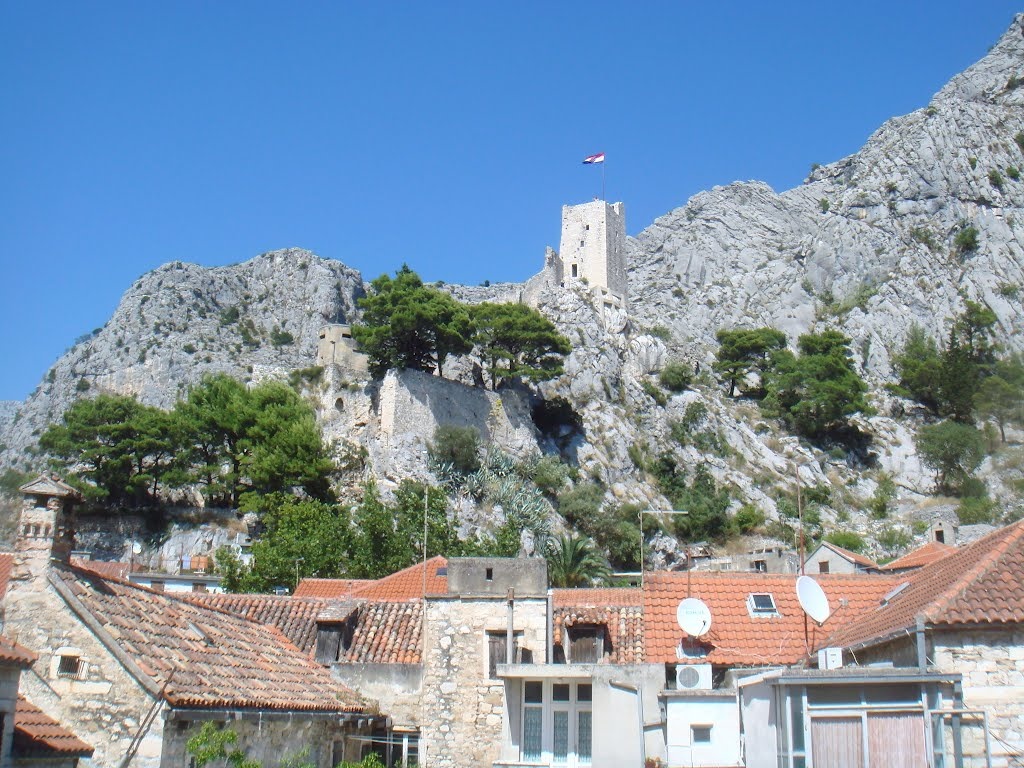
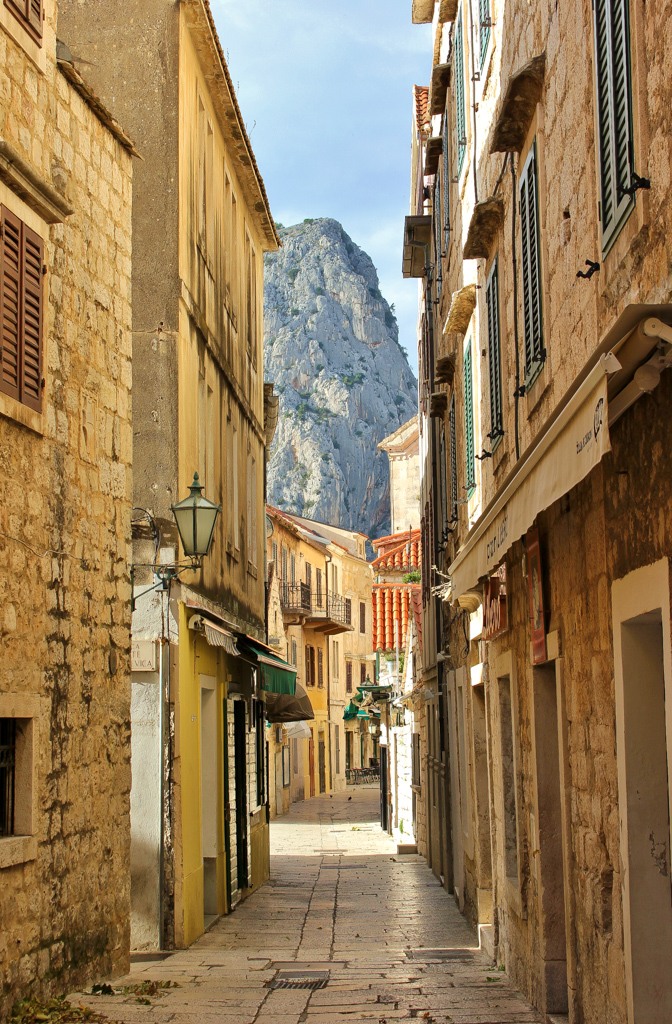
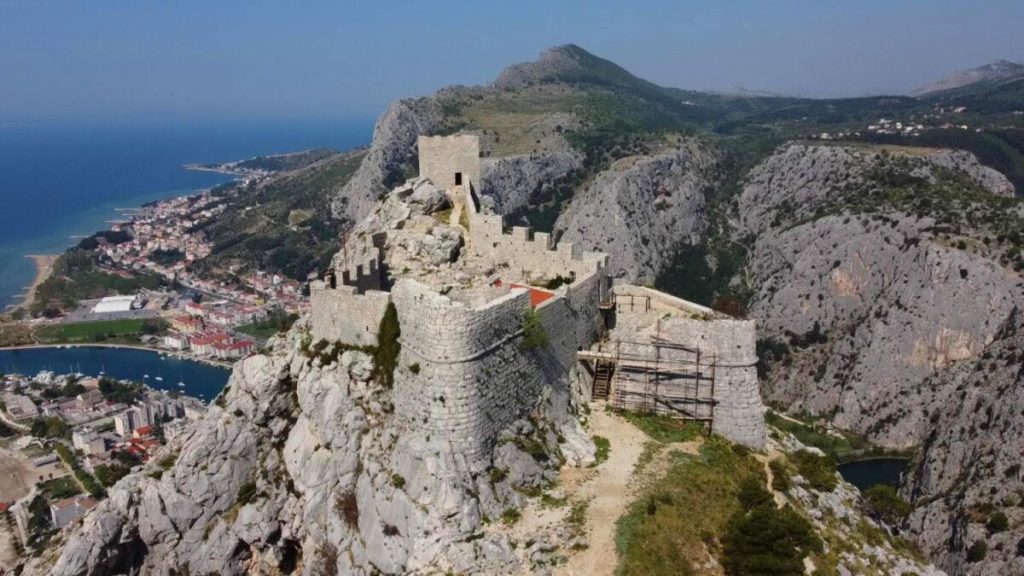
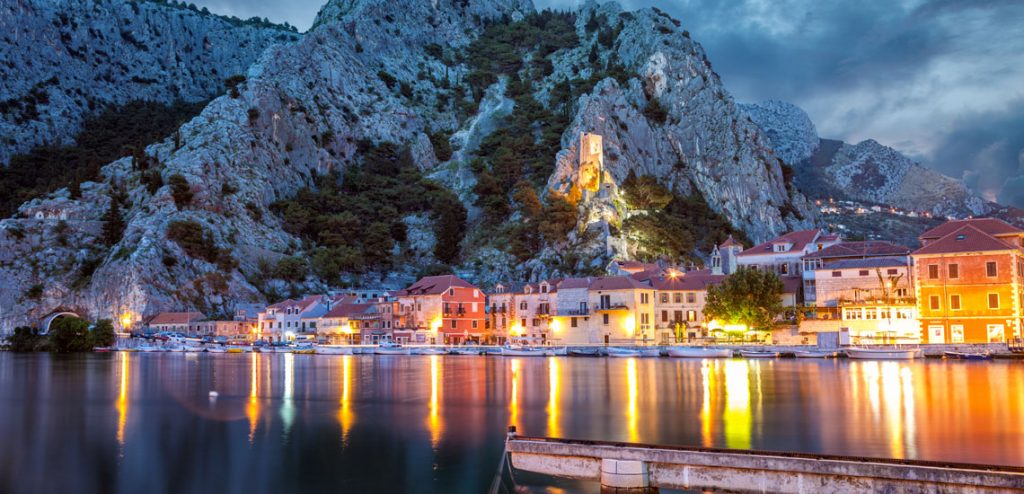
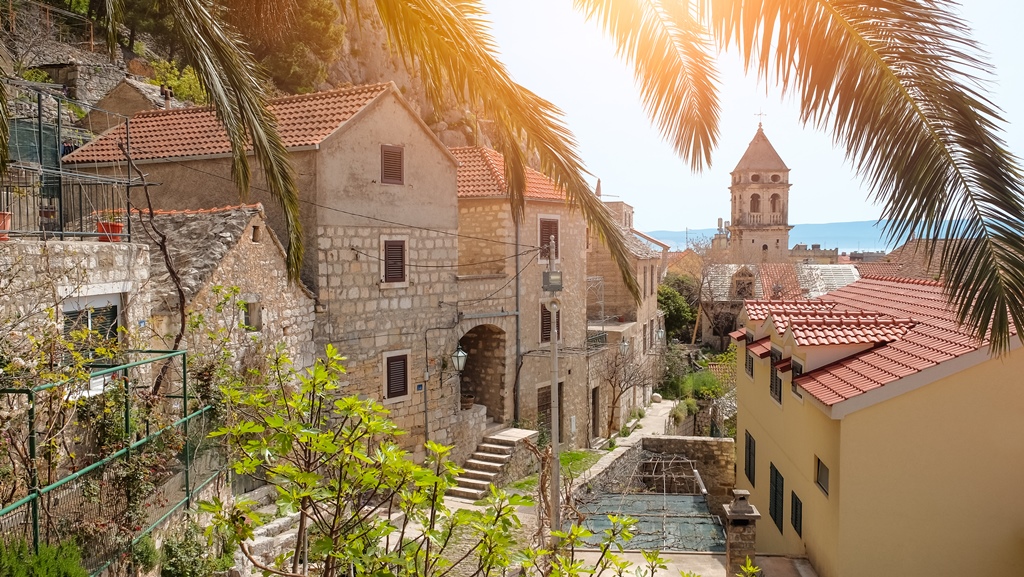
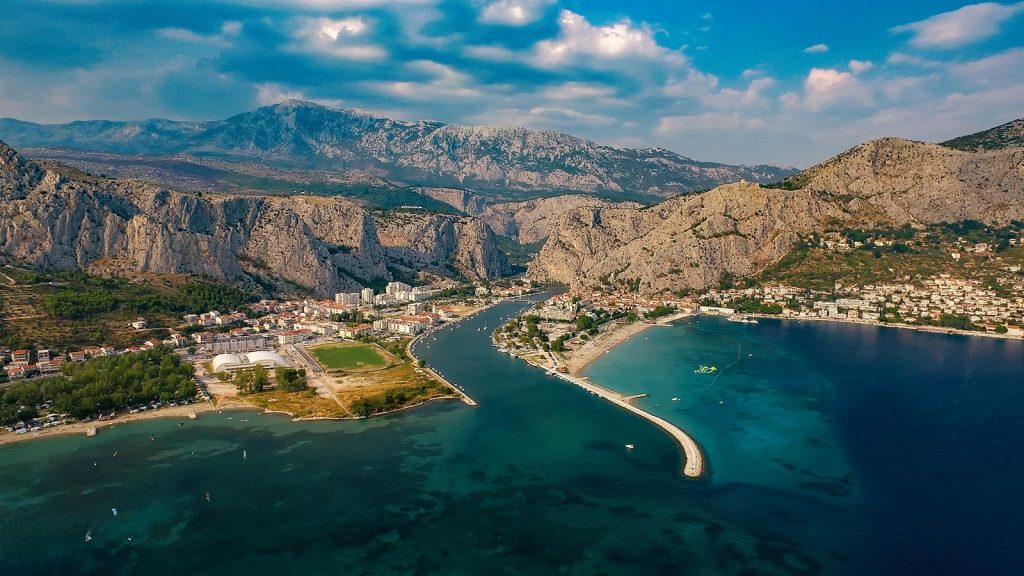
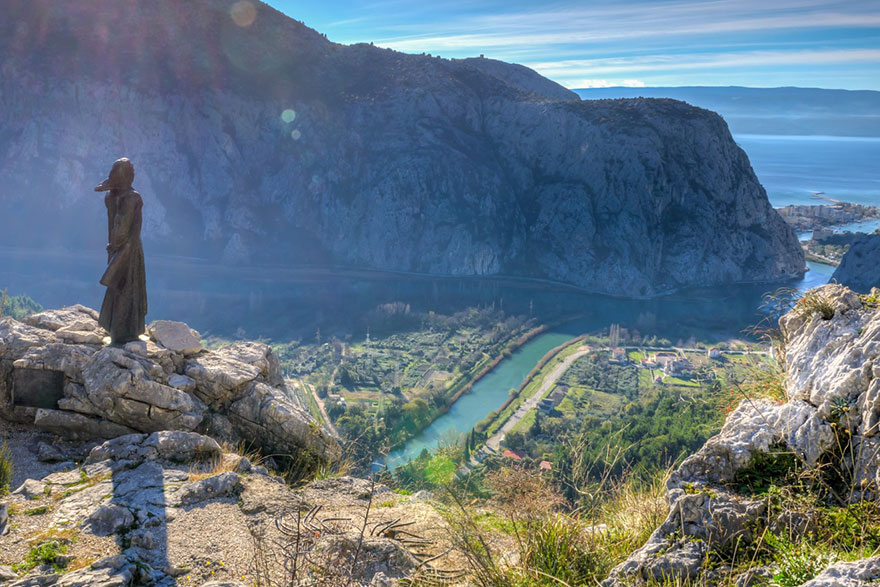
Omiš is a town and port in the Dalmatia region of Croatia only 3km away from us, and is a municipality in the Split-Dalmatia County. The town is situated approximately 25 kilometres (16 miles) south-east of Croatia’s second largest city, Split. Its location is where the Cetina River meets the Adriatic Sea.
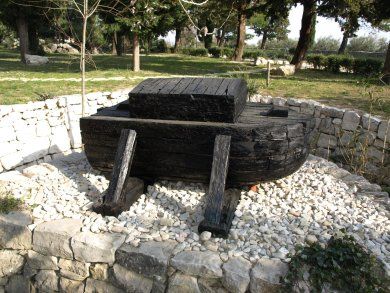
Omiš was well known in the past by the Corsairs of Almissa (Omiški gusari) whose Sagittas (ships) brought fame to them because they were built for attack and fast retrieval into the mouth of the Cetina River, protecting the town from foreign invaders. At a very early date, neighbours of the Corsairs of Almissa, the highlanders of the Poljica Principality (Poljička Republika), became their friends and allies. This allowed them to harass the seaborne trade, without fear of a sudden attack from inland.
Historical monuments:
Church of St Euphemia by the coast on Brzet, from the early 6th century
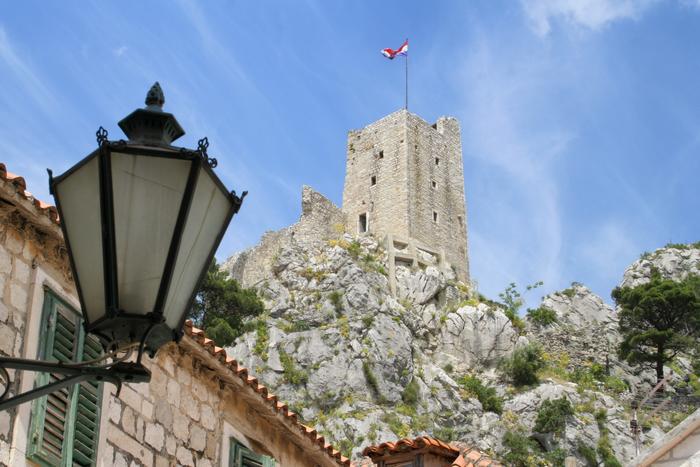
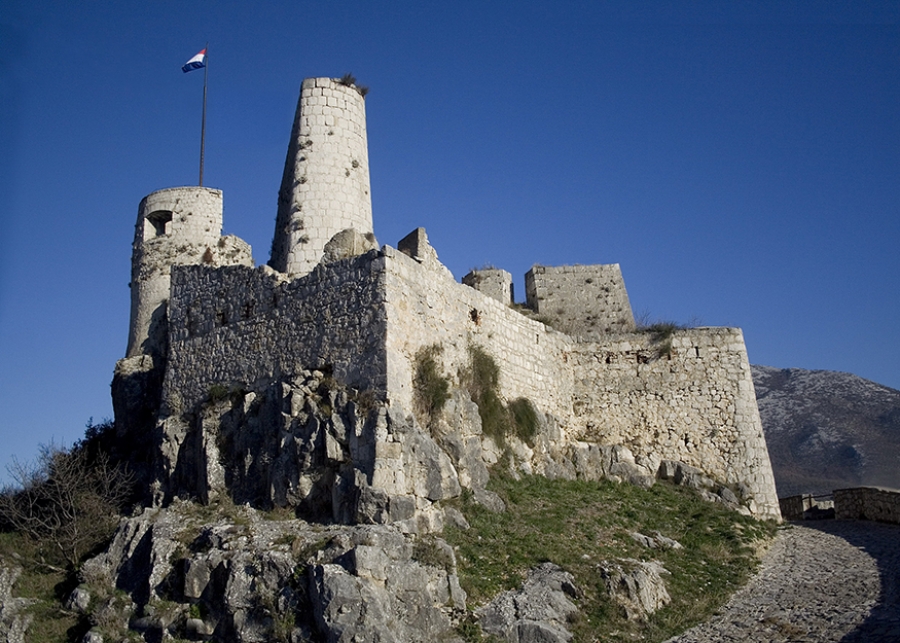
Mirabella Fortress (Peovica) from the 13th century
Starigrad Fortress (Fortica) from the 15th century
Renaissance church of the Holy Spirit from the 15th century
Old cemetery, the 16th century or 17th century
Parochial church from the 17th century
Franciscan Monastery on Skalice from the 18th century
In the Priko neighborhood, on the right bank of the Cetina River, stands the site with the most historic significance: the pre-Romanesque Church of St. Peter (Crkva Sv. Petra) from the tenth century A.D. This single-naved edifice, with a cupola and apse, was used in the 18th century as a Glagolithic seminary for novice priests.
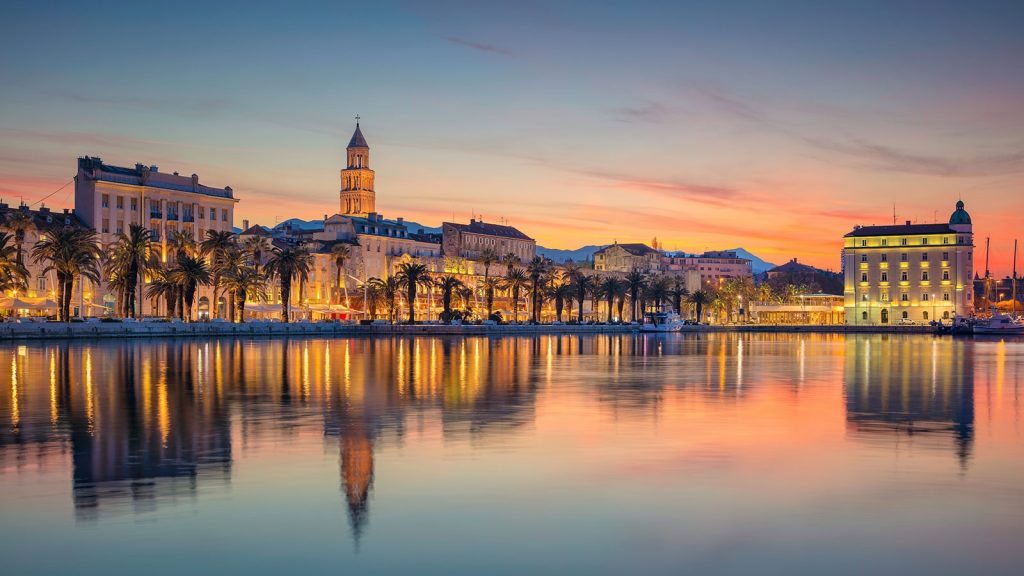
Split
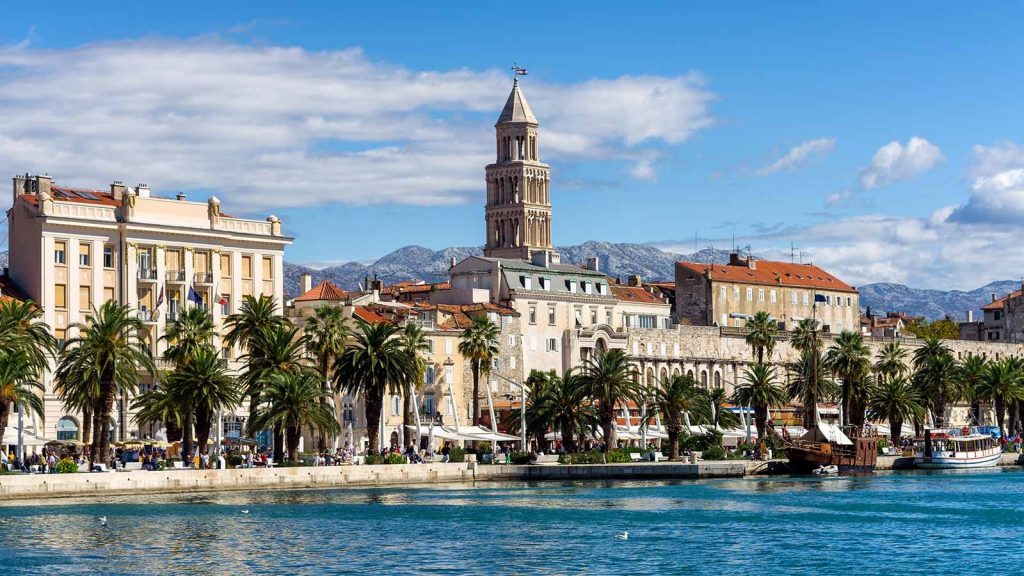
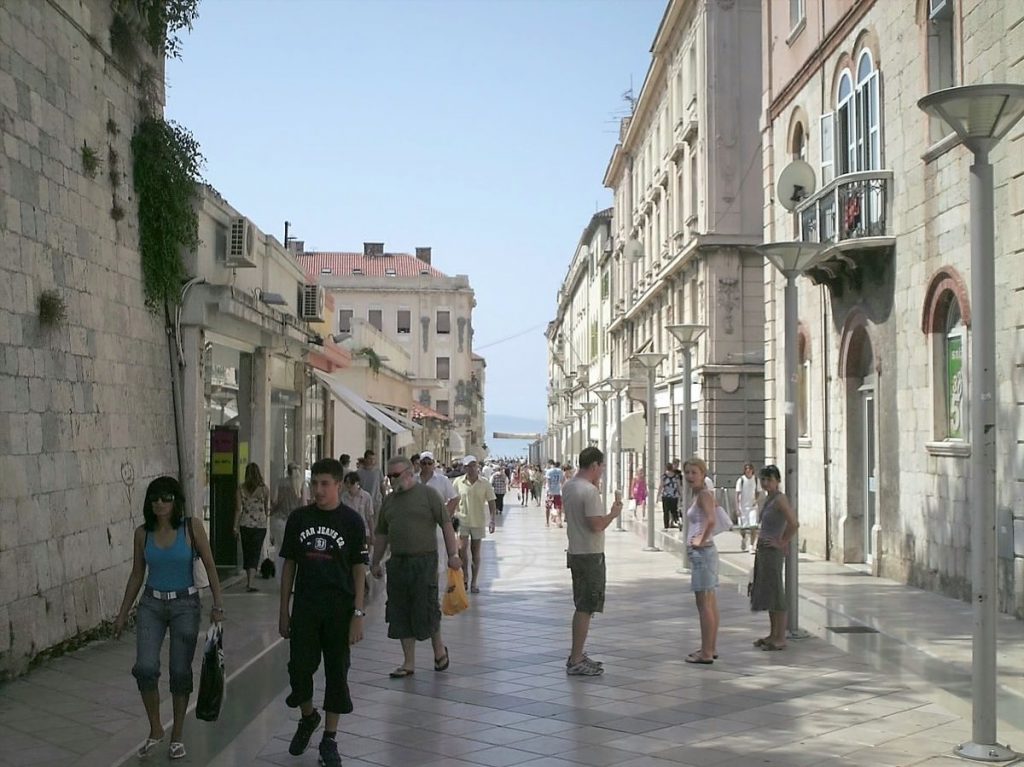
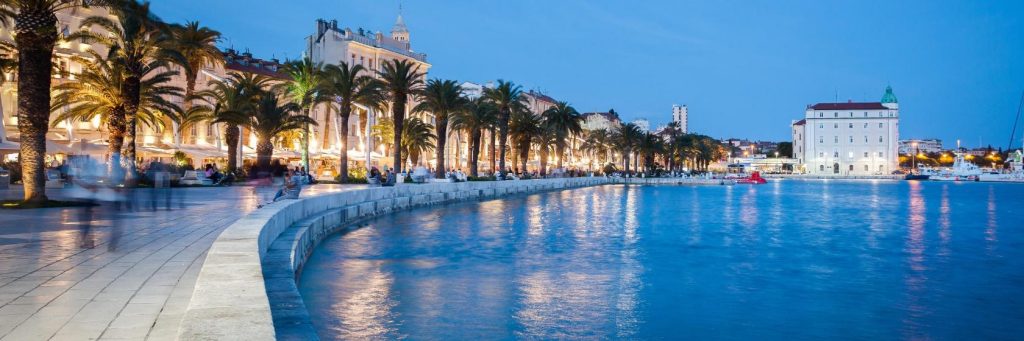
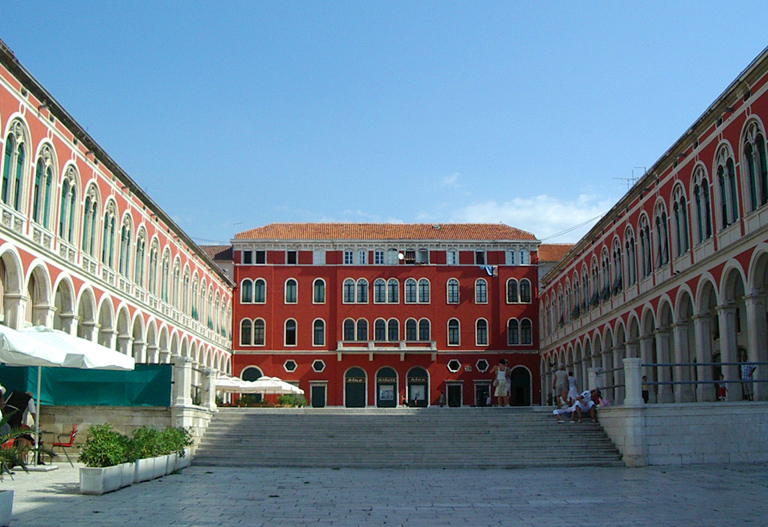
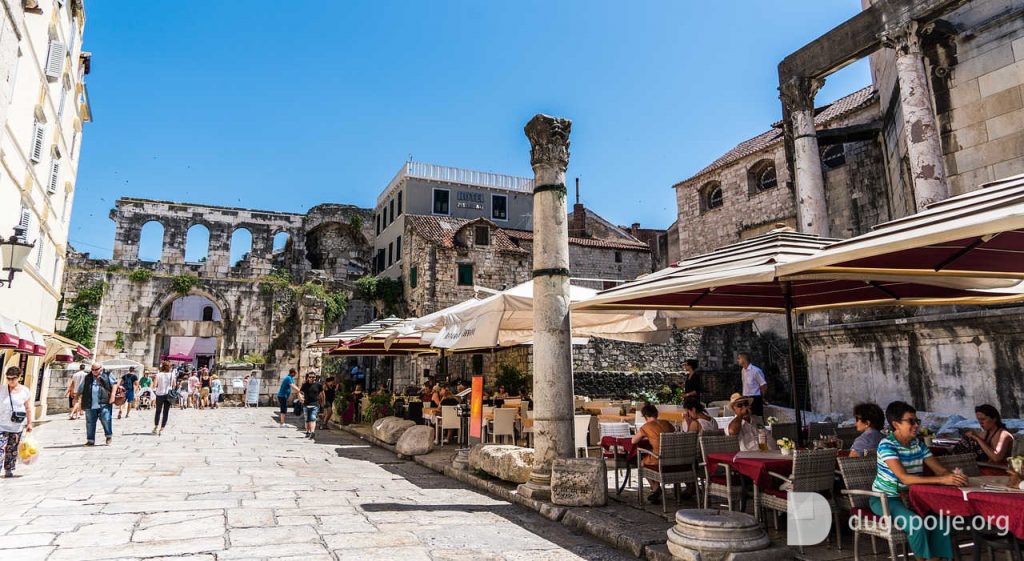
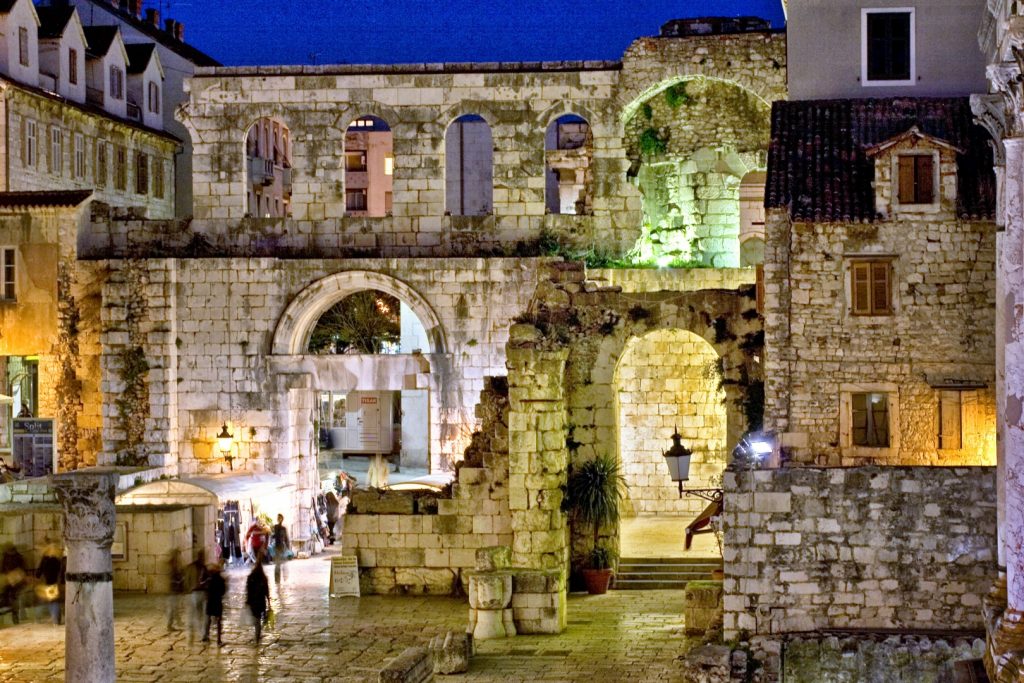
Split is Croatia’s second-largest city and the largest city in the Dalmatia region. It lies on the eastern shore of the Adriatic Sea and is spread over a central peninsula and its surroundings. An intraregional transport hub and popular tourist destination, the city is linked to the Adriatic islands and the Apennine Peninsula.
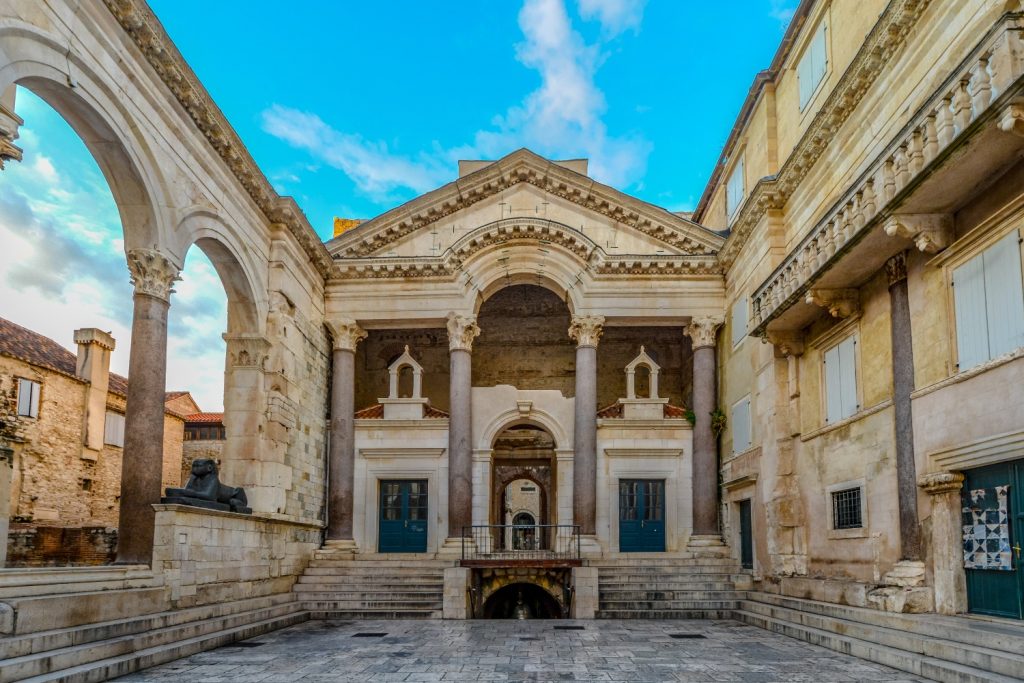
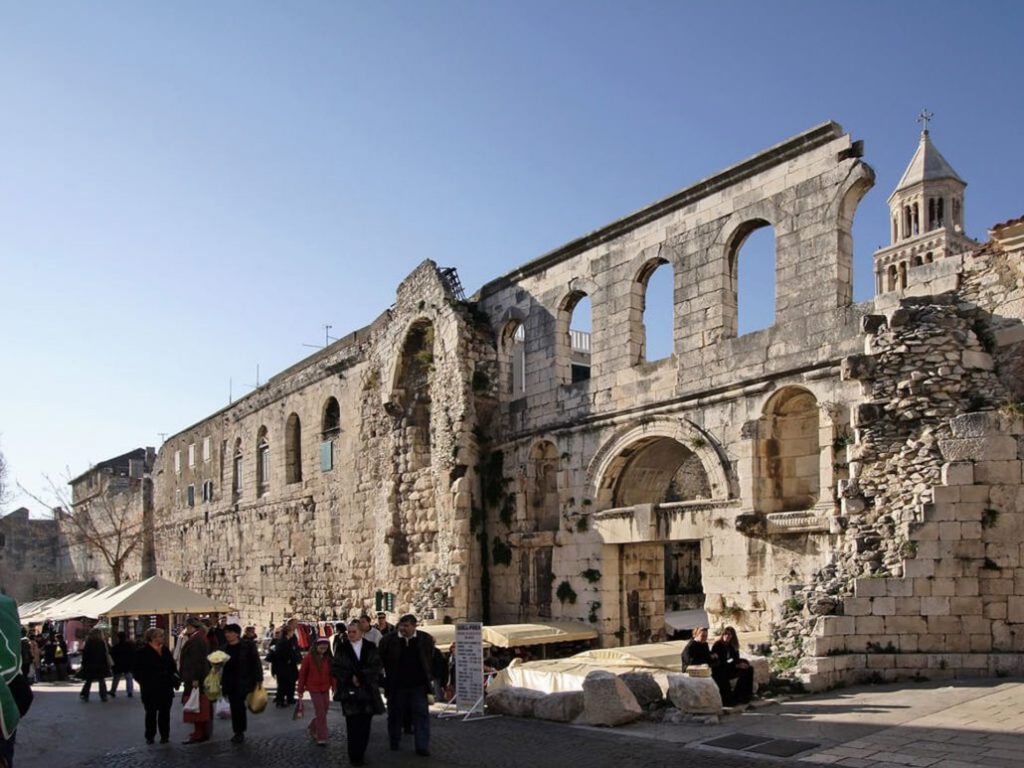
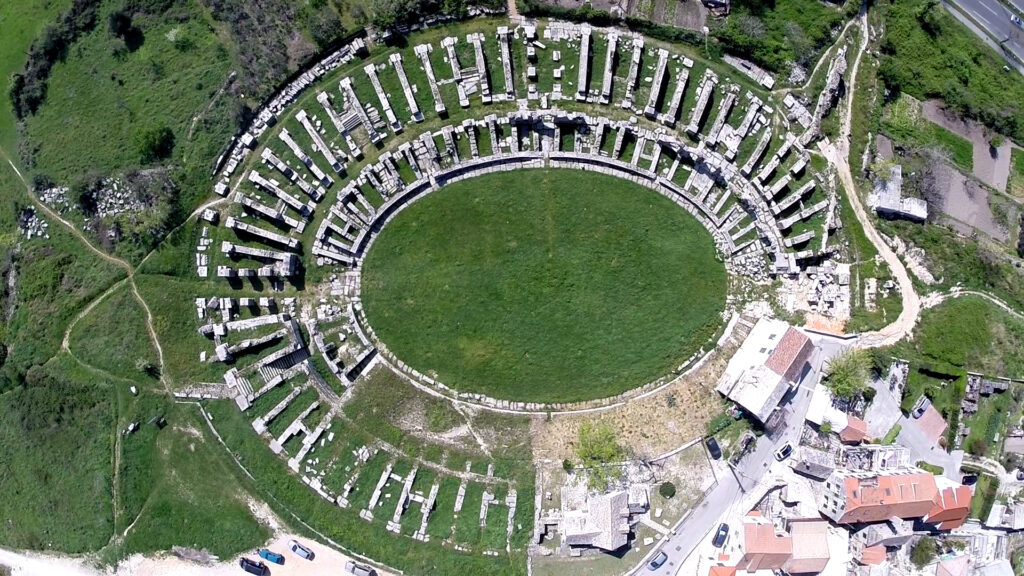
The city was founded as the Greek colony of in the 3rd or 2nd century BC on the coast of the Illyrian Dalmatae, and later on was home to Diocletian’s Palace, built for the Roman emperor in AD 305. It became a prominent settlement around 650 when it succeeded the ancient capital of the Roman province of Dalmatia, Salona. After the sack of Salona by the Avars and Slavs, the fortified Palace of Diocletian was settled by Roman refugees. Split became a Byzantine city. Later it drifted into the sphere of the Republic of Venice and the Kingdom of Croatia, with the Byzantines retaining nominal suzerainty. For much of the High and Late Middle Ages, Split enjoyed autonomy as a free city of the Dalmatian city-states, caught in the middle of a struggle between Venice and Croatia for control over the Dalmatian cities.